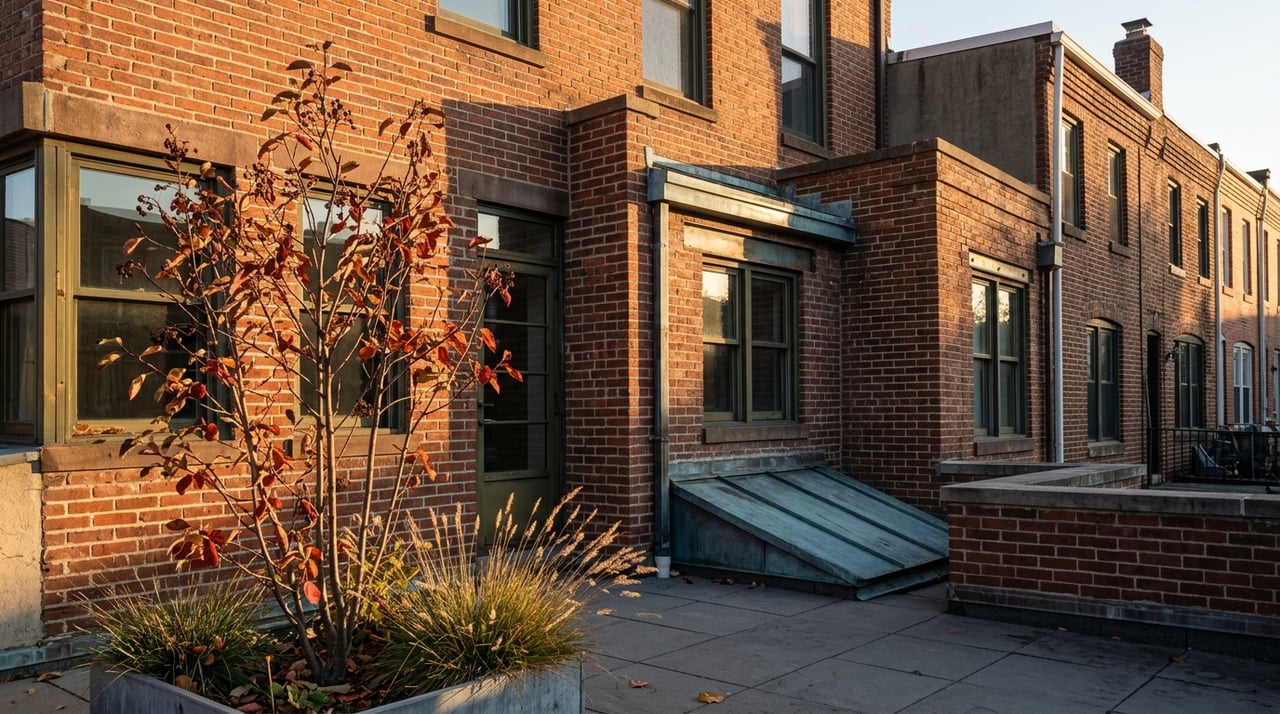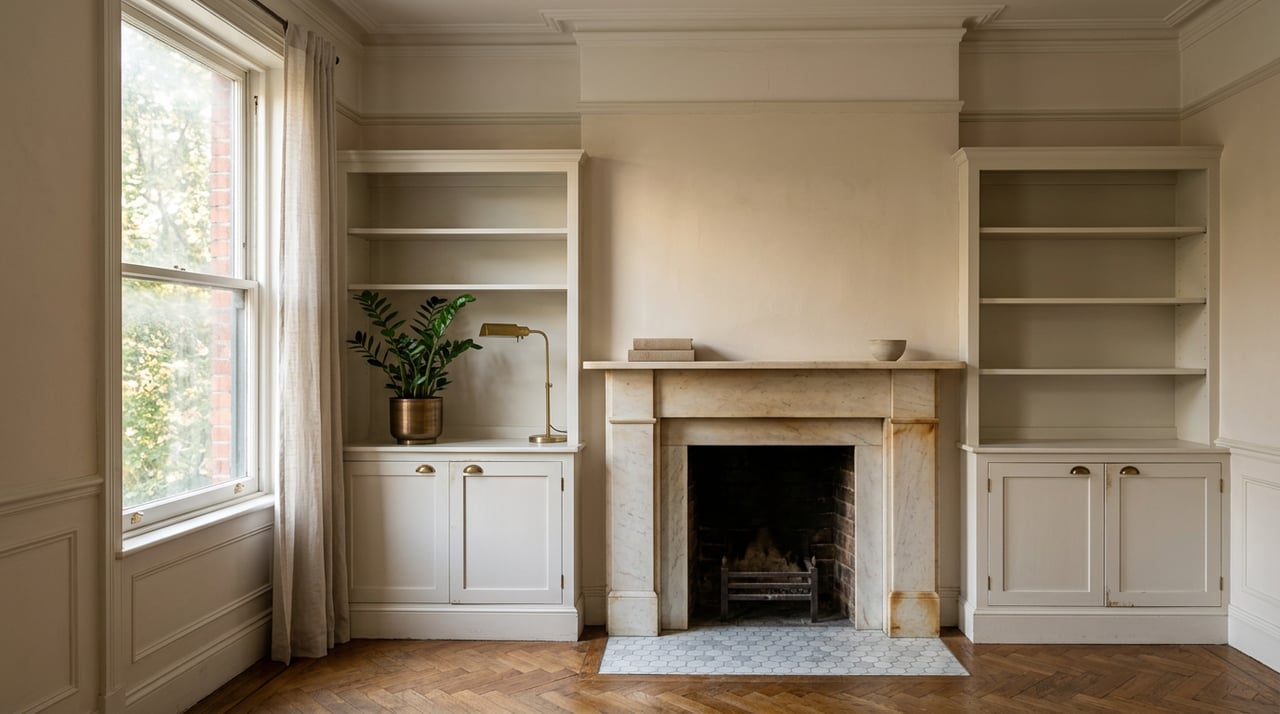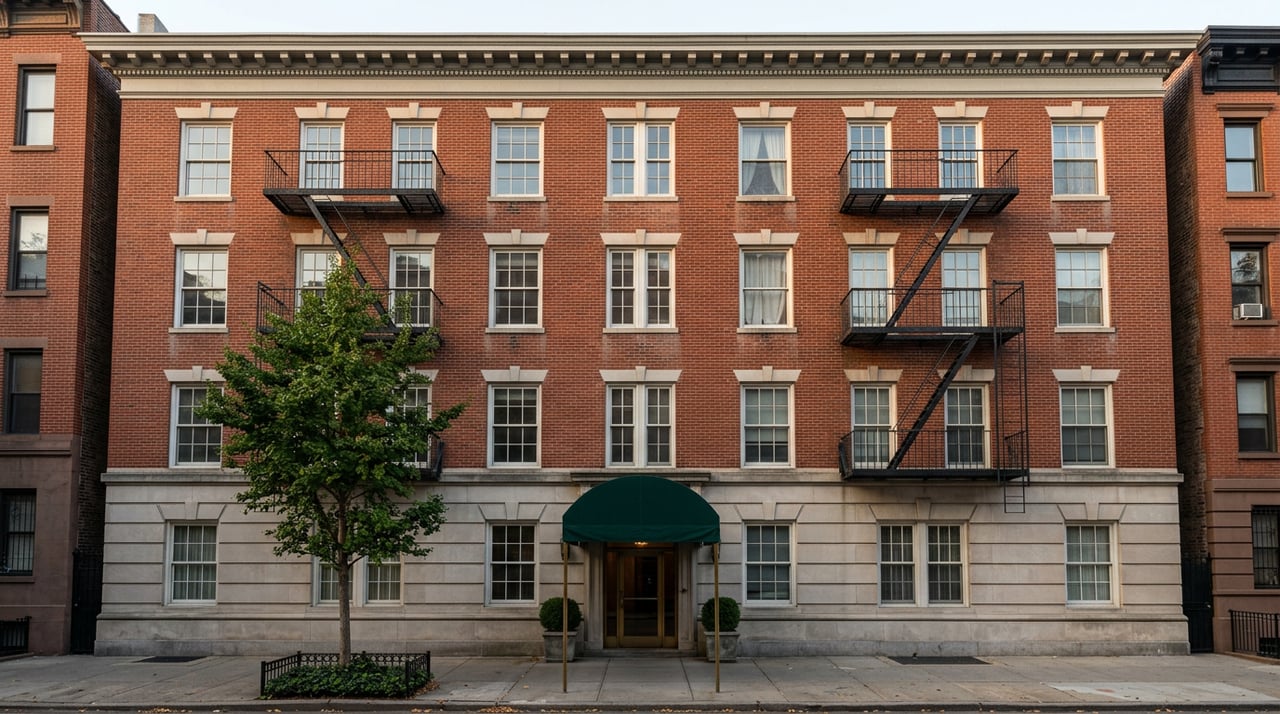
A buyer touring Brooklyn Heights this spring found a listing at 160 Henry Street that checked every box: prewar detail, a wood-burning fireplace, a common roof deck with Manhattan skyline views. The unit went into contract asking almost $5 million. Then the fine print arrived. The building's board requires 50 percent down. Not 20. Not 25. Half the purchase price, in cash, before the mortgage conversation even starts.
That number wasn't a fluke or a negotiating tactic. It's a policy this specific building has set for itself, and it has almost nothing to do with the fact that the apartment sits in Brooklyn Heights. It has everything to do with what kind of co-op 160 Henry Street actually is, and that distinction is the piece most neighborhood guides skip.
"Co-op" Is a Label, Not a Category
Brooklyn Heights has roughly three dozen buildings that carry the co-op designation, from six-unit walk-ups on Willow Street to 275-unit towers on Hicks Street. Treat that word as one product and you'll misjudge every building you tour. Treat it as a spectrum shaped by two very different histories and the down payment question stops being a surprise.
Most Brooklyn Heights co-ops you'll see on a tour were not built as co-ops. They were rental buildings, often prewar, that converted to cooperative ownership during the wave of conversions that swept New York City in the 1980s. The Van Anden at 61 Pierrepont Street is a clean example: built in 1905 as a rental, it didn't become a co-op until 1987. Eight decades as rental housing, then a conversion that turned tenants into shareholders almost overnight.
A small number of buildings never went through that process. They were built as co-ops from day one and have operated that way ever since, with no rental era, no sponsor conversion, no tenant buyout. Listings for 160 Henry Street describe it as one of only four continuously operating prewar co-ops in Brooklyn Heights, a phrase that shows up consistently across the building's marketing because it's a genuinely rare structural fact, not a sales flourish.
The Four Buildings That Never Left
Here's what that distinction looks like on the ground, using three buildings from the same few blocks of the Heights:
| Building | Built | Co-op Since | Units | Down Payment Signal |
|---|---|---|---|---|
| 160 Henry Street | 1924 | 1924 (never converted) | 38 | 50% on a recent contract |
| The Van Anden, 61 Pierrepont Street | 1905 | 1987 (converted) | 40 | Standard building minimum |
| 20 Pierrepont Street | 1934 | 1934 (never converted) | 24 (shares a co-op with 65 Montague Street) | 20% minimum |
Notice that two of these three buildings never converted, and their down payment policies land at opposite ends of the range. That's the point. The conversion-versus-original split tells you why the number varies so much building to building. It doesn't tell you which direction a given building will land. You still have to ask.
Why the Conversion Date Still Shows Up on Your Mortgage
Co-op boards across New York City commonly ask for at least 20 percent down, and plenty require 25 to 30 percent, with some prewar or luxury buildings pushing to 40 or 50 percent, and a handful accepting only cash. That range exists because a co-op board isn't just approving a buyer's finances. It's underwriting the building's own financial health, and buildings that were assembled through a sponsor conversion often carry different baggage than buildings that have been self-governed since construction.
A building converted in the 1980s may still carry an underlying blanket mortgage from the original conversion plan, shares held by long-departed sponsors, or a reserve fund built from scratch decades after the building was already showing wear. A building that was cooperative from its first year of operation set its financial rules at inception, with no sponsor debt to work around and, often, a longer track record of stable maintenance increases. Boards that manage a cleaner balance sheet can afford to be more flexible on financing. Boards managing legacy conversion debt or thin reserves tend to compensate by asking buyers to bring more cash to the table and to prove they can sit on 12 to 24 months of mortgage and maintenance payments after closing.
None of this is visible from a listing photo or a neighborhood median. It's visible in a board's financial statement and its house rules, which is exactly the paperwork most buyers don't request until they're already emotionally attached to an apartment.
What This Does to the Cobble Hill Comparison
Buyers cross-shopping Brooklyn Heights against Cobble Hill are usually working from a single number: price per square foot. According to a Real Deal analysis of one- to three-family home sales published in mid-August 2026, Brooklyn Heights townhomes traded at a median of $2,047 per square foot year to date, up 11.9 percent, while Cobble Hill townhomes, a few blocks southeast, sold at $1,495 per square foot over the same window, down 8.7 percent.
That gap is real, and it's worth knowing before you set a budget. But it measures townhouses, a different product with a different ownership structure entirely. It says nothing about what a co-op board in either neighborhood will ask of your finances, and that's the number that actually determines whether a specific apartment is reachable for a specific buyer. A townhouse premium tells you what the block costs. A board's down payment policy tells you what the transaction costs, and the two don't move together.
Brooklyn's overall housing stock is still tilted toward co-ops over condos, though the balance keeps shifting as new condo development lands along the waterfront and in Downtown Brooklyn. Brooklyn Heights sits at the older end of that trend, which is exactly why its co-op stock includes so many conversion-era buildings and so few originally cooperative ones. That history is baked into the neighborhood's housing supply in a way a single median price can't capture.
How to Get the Real Number Before You Fall for a Listing
The fix isn't complicated, but it does mean asking questions before you're three showings deep into a building you already want to live in.
- Ask the listing agent for the building's stated minimum down payment in writing, not a verbal estimate.
- Ask whether the building was built as a co-op or converted, and if converted, in what year.
- Request the co-op's most recent financial statement and board meeting minutes through your attorney.
- Confirm the post-closing liquidity requirement, typically expressed as months of combined mortgage and maintenance in reserve.
- Check whether the building carries an underlying mortgage from a conversion era, and if so, how it factors into your share loan.
Every one of those questions can be answered before you write an offer, and every one of them matters more than the neighborhood's headline price per square foot.
Frequently Asked Questions
Does a higher down payment requirement hurt resale value? It can. A building that requires 50 percent down narrows its own buyer pool at resale, since future buyers face the same hurdle. That's a fair question to raise with your agent before you buy into a building with an unusually strict policy.
Are all Brooklyn Heights co-ops this strict? No. Down payment requirements in the neighborhood range from a standard 20 percent minimum at buildings like 20 Pierrepont Street to 50 percent at buildings like 160 Henry Street. The building's own history and finances, not its zip code, set the number.
Brooklyn Heights rewards buyers who ask about the building before they ask about the block. If you're comparing co-ops here against Cobble Hill, Park Slope, or anywhere else in brownstone Brooklyn and want someone to pull the actual board financials before you fall for a listing, The Rosen Team is glad to walk through it with you. Schedule a 10-minute introductory call and we'll start with the paperwork, not the photos.